Mike has a passion for social justice, mental wellness, and self-care. He is caring, warm, and collaborative. He draws upon his 15 years of working with people with trauma and as an educator within the mental health and addictions field to provide evidence-based courses to meet your needs. He has more than 20 years of experience working with children, youth, and their families through complex situations and scenarios, including sex trafficking and childhood trauma.
REGISTRATION
Info on this course here: www.lifesaver.life/mentalhealth
Register for this course here: www.lifesaver.live/register and send an e-transfer of the deposit of $75+HST=$84.75 to lifesaver.register@gmail.com. The remainder is due the day of the course.
Please note that participants must complete all modules in full to receive their certificate.
All sales are final. No refund for cancellations. As spots are limited, your purchase prevents others from securing that spot. If you are not able to make the course, and if there is space available, we may offer you a spot at a future date. The minimum age for certification is 18 yrs old. All registrants must participate from an individual device (computer/phone).
COURSE DETAILS
This virtual online course portion will run on Friday, July 31st from 9:00 am to 12:00 pm EST and from 1:00 pm to 4:00 pm.
Contact Info
Michael Fischhoff, LifeSaver, DMin, MTS, MDiv, MTS, Registered Psychotherapist (RP)
Web: www.lifesaver.live
COURSE OVERVIEW
Mental Health First Aid (MHFA) Essentials provides the knowledge, skills, and attitudes for participants to recognize changes in mental health, respond supportively, and apply practical actions for declining mental health and crisis situations. It helps participants build confidence, reduce stigma, and enhance their own mental health.
Objectives
This MHFA six hour course helps participants:
- Increase their awareness of mental health
- Distinguish between mental health, mental illness, and mental health conditions.
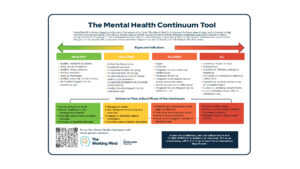
- Recognize indicators of mental health across the continuum (optimal, declining, poor).
- Improve their confidence to provide help
- Apply the ALGES framework in scenarios of declining mental health and crisis.
- Demonstrate empathy and effective listening skills in supportive interactions.
- Communicate non-judgmentally using verbal and non-verbal skills.
- Provide reassurance and appropriate information in supportive conversations.
- Explain recovery-oriented approaches to providing support.
- Decrease their mental health-related stigma
- Recognize stigmatizing language and practice respectful alternatives.
- Reflect on personal attitudes and biases that contribute to stigma.
- Understand risks and limitations associated with diagnostic labeling.
- Enhance their mental health
- Identify personal self-care strategies using the Three Pillars of Self-Care: reflective, purposeful, and boundaries.
- Recognize when self-care is needed as a Mental Health First Aiders and how to integrate it into daily life.
- Commit to intentional self-care actions to maintain personal well-being as a Mental Health First Aider.
If you have any questions, do not hesitate to reach out by email.