
Written by Lauren Cleveland, Specialist, Facilitator Experience
Many coaches want to support mental health. They see the signs and indicators. They care about their athletes. They understand that performance isn’t just physical, it is also mental. But when it comes time to start the conversation, there’s often hesitation.
- What do I say?
- What if I say the wrong thing?
- How can I support? What is my role when it comes to support?
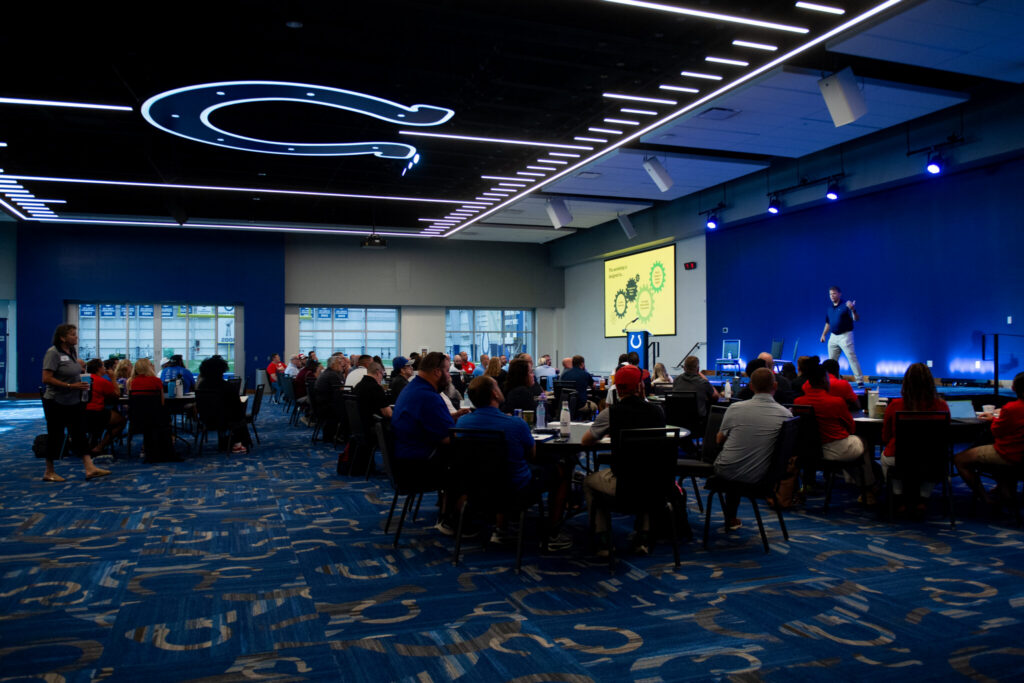
These are the kinds of questions that we heard in our The Working Mind Workshop with Kicking the Stigma and the Indianapolis Colts.
And they’re important questions. Because when coaches feel equipped and are willing open the conversation, we know that is when athletes feel comfortable to share.
Moving From Silence to Conversation
In many sport environments, mental health tends to be something that stays in the background, not because coaches don’t care, but because they aren’t sure how to start that conversation; whether that be language, confidence, or shared understanding to be able to talk about it.
In this workshop, we saw this play out early on:
- Coaches are engaged, but cautious
- They were curious, but unsure how this fits into their role
- They’re thinking about their athletes, their own experiences, and the dynamics of parents
As the session unfolded, we witnessed the hesitation subside and curiosity take the place of uncertainty.
What Changed in the Room
One of the most consistent things we observed this the shift from uncertainty to openness.
Coaches began to:
- Recognize mental health as part of overall performance and wellbeing, and see where they can create space for dialogue around mental health
- Acknowledge that they don’t need to be experts to make a difference
- Understand that small, everyday interactions matter
We asked coaches to share: What is one thing that you are taking away from this workshop?
Here are few of their responses:
“I need to make mental health conversations more intentional” – 2026 participant
“Mental health is just as important as physical health, and coaches play a key role in reducing stigma and supporting student-athletes. Small conversations and genuine connections can make a significant difference in an athlete’s willingness to seek support.” – 2026 participant
“Strategies to implement sessions during practices to create safe spaces and opportunities to communicate about their overall well-being.” – 2026 participant
There were often moments where the room got quiet, not due to disengaged, but in reflection.
This is usually when we can see the wheels turning and we get to witness the information landing.
Because this isn’t just about information, it’s about permission.
Permission to notice.
Permission to check in.
Permission to have conversations that might be uncomfortable, but necessary.
It’s Not About Having the All the Answers
A key insight that often resonates:
Coaches don’t need to have all the answers they just need a place to start.
“The biggest takeaway for me is that coaches can positively impact mental health by listening, showing empathy, and knowing when to connect athletes with additional resources.” – 2026 participant
Many coaches come in expecting they’ll need scripts or perfect phrasing. What they leave with instead is something more practical:
- A way to recognize when someone might be struggling
- Language to open a conversation
- Confidence to listen without trying to fix everything
It’s a shift from the pressure to be “the expert” to confidence in being present and supportive.
Small Actions, Meaningful Impact
When coaches open up and talk about mental health, the impact isn’t always immediate or obvious, but it’s meaningful.
It can look like:
- An athlete feeling supported to speak up
- A team culture where check-ins become normal
- A conversation happening earlier, rather than later
Over time, these small actions build something bigger: trust, connection, and psychological safety within the team.
What This Means for Sport Environments
Leaders carry a disproportionate share of workplace stress. They also carry a disproportionate influence When coaches feel equipped to engage in mental health conversations:
- Silence is replaced with openness
- Uncertainty is replaced with confidence
- Support becomes part of everyday coaching
And more importantly, coaches often feel less alone in navigating these moments.
A Starting Point
Not every conversation will feel easy. Not every moment will be clear.
But the goal isn’t perfection, it’s progress.
If there’s one takeaway we see consistently, it’s this:
“I think a big takeaway is that several of the coaches in attendance came back for a second year. Also, that while the training/education is critical, the conversations within the tables are really what sets this event apart.” – Brett Kramer, Director of Kicking the Stigma
When coaches open up, even in small ways, it creates space for others to do the same.