If you are in distress, you can call or text 988 at any time. If it is an emergency, call 9-1-1 or go to your local emergency department.

Impact

The impact we’re making together

Case Studies

Explore a collection of in-depth case studies that reveal how mental health training made the difference in so many different industries.

12 December 2025
The duty to accommodate in Canadian workplaces includes both the duty to inquire and the duty to implement appropriate accommodations—an especially important distinction in mental health contexts where needs may be less visible. Employers must be able to recognize changes, initiate supportive and non-judgmental conversations, and provide timely, tailored adjustments.
19 November 2025
Not through technology, accolades, or physical feats, but through the quiet courage of showing up as our truest selves. For too long, society applauded the loudest, boldest, strongest among us, while discouraging vulnerability. But that narrative is shifting. Strength is no longer defined for us; it is something we define for ourselves. 
14 November 2025
Mental Health First Aid International (MHFAI) and Opening Minds, an initiative off the Mental Health Commission of Canada (MHCC), are working together to bring The Working Mind (TWM) to Australia – a program proven to shift attitudes, behaviours and cultures around mental health in the workplace. 
6 November 2025
Explore the future of employee wellness. Learn how technology, mental health programs, and psychological safety are transforming workplaces in 2025 and beyond.

Testimonials

Delve into research studies that unveil the power of our training. Explore the data-driven proof of how Opening Minds makes a difference.

The Duty to Accommodate and Mental Health: Why Training Matters More Than Ever 

12 Dec 2025

Understanding how these duties operate in the context of mental health is essential. Understanding how to have safe, supportive, stigma-free conversations is even more essential. 

This is where mental health training becomes not just helpful, but foundational. 

The Procedural Component: Understanding the Duty to Inquire 

The procedural component requires employers to take steps to understand an employee’s disability-related needs. In the words of the reference document, employers “have a duty to inquire about the disability-related needs of the employee,” even when the employee has not requested accommodation.

This duty arises in two common scenarios: 

Scenario 1: The Employee Identifies Their Challenges 

Sometimes an employee comes forward with an accommodation request, saying they’re struggling. Even then, employers must gather the information needed to understand how the employee’s needs affect their work, while still protecting privacy.

Employees may hesitate because medical information is deeply personal, and they may fear stigma or negative repercussions. Creating a psychologically safe culture around the accommodation process helps reduce this hesitation. 

Scenario 2: The Employer Notices a Change and Must Inquire 

The duty to inquire also applies when the employer “suspects, or should suspect,” that a disability could be affecting performance – especially when mental illness makes it difficult for individuals to recognize or communicate their needs.

The referenced guidance explains that this inquiry must occur before performance management or disciplinary action is taken. It also recommends approaching employees using factual observations such as: 

  • “I’ve noticed that you don’t seem to be yourself lately. Is there anything you’d like to talk about?” 
  • “Your productivity numbers have fallen recently. I want you to be successful. Is there anything I can do to help you?” 

These examples align directly with the type of stigma-free, supportive conversations that mental health training prepares leaders to have. 

In Mental Health Contexts, the Duty to Inquire = The Duty to Have a Safe, Brave Conversation 

What makes mental health unique is that symptoms are often invisible. An employee may not understand their condition, may be reluctant to discuss it, or may fear being judged. This is why the duty to inquire, in practice, becomes the duty to engage in a conversation that is: 

  • grounded in non-judgment and curiosity 
  • respectful of privacy 
  • informed, not assumptive 
  • focused on behaviour and observable changes 
  • supportive rather than diagnostic 

This requires skill, and not all leaders have been trained to navigate these moments. 

This is one of the key reasons mental health training is essential. 

How Opening Minds Training Strengthens Culture and Capacity 

Culture Support: The Working Mind (TWM) 

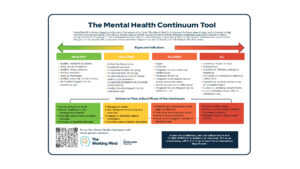
TWM helps build a psychologically healthy and safe culture by increasing mental health literacy, reducing stigma, and giving everyone a shared tool, the Mental Health Continuum, to identify changes early and talk about them openly. 

This directly supports the procedural duty by making conversations about mental health feel normal rather than exceptional. 

Conversation Capacity: Mental Health First Aid (MHFA) 

MHFA equips employees and leaders to: 

  • recognize signs of a mental health problem 
  • approach someone safely and non-judgmentally 
  • engage in supportive conversations 
  • provide immediate assistance 
  • encourage appropriate professional help 

These are the precise skills needed to navigate the duty to inquire with sensitivity, respect, and confidence. 

Together, TWM and MHFA give organizations both the culture and the practical skills needed to fulfill the procedural duty in a meaningful, human-centred way. 

The Substantive Duty: Accommodation Doesn’t Always Require a Complex Plan 

The reference document notes that the substantive duty involves putting accommodation measures in place and assessing their reasonableness.

In practice, especially with mental health, early interventions are often simple but effective. 

The Mental Health Continuum reminds us that mental health changes over time. Early conversations allow employers to offer support before the situation escalates. 

Accommodations may include: 

  • temporary workload adjustments 
  • flexible scheduling 
  • modified duties 
  • use of sick or mental health days 
  • increased check-ins 
  • quiet spaces or environmental adjustments 

These align with the source document’s guidance that accommodation should be tailored to what the employee can and cannot do, not their diagnosis.

Early support can prevent crises, reduce absenteeism, and lower the likelihood of long-term disability claims, benefiting both the employee and the organization. 

Conclusion: Training Makes the Duty to Accommodate Possible 

The duty to accommodate is nuanced, but when it comes to mental health, one thing is clear: 

Supporting employees requires a culture that makes space for conversations and the skills to have those conversations safely and confidently. 

With evidence-based training like The Working Mind and Mental Health First Aid, employers can: 

  • notice changes earlier 
  • engage in supportive, stigma-free inquiry 
  • provide appropriate accommodation 
  • foster healthier, more resilient teams 
  • support productivity and retention 

Accommodation is not just a legal responsibility -it’s a human one. Mental health training ensures employers can meet that responsibility with sensitivity, confidence, and respect. 

What HR Leaders and Managers Can Do Next 

To strengthen your workplace’s ability to meet both components of the duty to accommodate, especially the duty to inquire, consider taking these three practical steps: 

1. Build Your Confidence in Having Safe, Supportive Conversations 

Learn how to approach concerns about performance, behaviour, or well-being in ways that are non-judgmental and grounded in psychological safety. These skills are what make the duty to inquire possible. 

2. Learn to Recognize Shifts in Mental Health 

Whether it’s changes in communication, productivity, engagement, or behaviour, knowing the signs of shifting mental health helps you intervene early, long before a crisis develops. 

3. Examine and Challenge Your Own Stigma 

Everyone has unconscious biases. Reflect on your own assumptions about mental health and how they might affect the way you respond to employees. Leaders who recognize and reduce stigma create safer, more inclusive workplaces. 

Strengthen Your Culture and Capacity with Opening Minds 

If you’re ready to help your organization meet its duty to accommodate with confidence and care, explore The Working Mind and Mental Health First Aid. 

Together, they help create workplaces where employees feel safe to speak up, accommodated, and leaders can feel capable of supporting them. 

  1. Information in this article was sourced from: Ontario Human Rights Commission. Policy on Preventing Discrimination Based on Mental Health Disabilities and Addictions: 13. Duty to Accommodate. OHRC, https://www3.ohrc.on.ca/en/policy-preventing-discrimination-based-mental-health-disabilities-and-addictions/13-duty ↩︎

A group of five men share smiles and laughter, enjoying each other's company.

Redefining Strength: A Conversation on Men’s Health 

19 Nov 2025

Featuring the perspective of firefighter and facilitator Pat Zazelenchuk

Strength is evolving.  

Not through technology, accolades, or physical feats, but through the quiet courage of showing up as our truest selves. For too long, society applauded the loudest, boldest, strongest among us, while discouraging vulnerability. But that narrative is shifting. Strength is no longer defined for us; it is something we define for ourselves. 

Redefining Strength Beyond Stoicism

And yet, the weight of expectation still presses heavily on men. According to the Canadian Mental Health Association, 60% of people with a mental health problem or illness won’t seek help for fear of being labelled ‘weak’.1 It’s a statistic that speaks volumes, because asking for help is not weakness, but courage. 

It’s time to redefine strength: to let go of rigid checkboxes and embrace all that strength can be. 

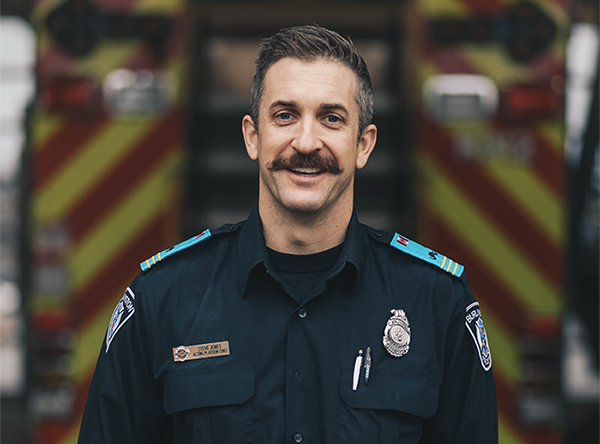
This November, as we continue to unlearn for Men’s Health Awareness Month, we sat down with Pat Zazelenchuk. By day, Pat is a firefighter with the City of Edmonton, carrying the physical demands of his job with skill and dedication. By night, he is a facilitator in our network, showing that mental strength requires its own kind of courage. For Pat, strength isn’t a fixed state, it’s daily practice. 

Asking for Help as Everyday Courage

“Strength isn’t measured by physical endurance or stoic silence,” he says. “It means being honest about your emotions, unafraid of judgment, and no longer feeling the need to perform toughness.” Over time, Pat’s understanding of strength has deepened. “Historically, men were expected to suppress vulnerability, but that suppression disconnects us from ourselves and those around us.” True strength, he explains, comes from acknowledging pain, expressing feelings, and embracing emotional openness. That’s what brings balance to life. 

Pat emphasizes that asking for help is not weakness, it’s wisdom. Through therapy and the support of his family, he learned to navigate stress, recognize triggers, and develop healthy coping strategies. “Life is too short to live in distress, anger, or shame,” he reflects. His lived experience, combined with his work as a Mental Health First Aid (MHFA) and The Working Mind (TWM) facilitator, reinforces a critical message: men’s mental health matters, and seeking support is essential. 

Support, Pat admits, isn’t always simple. Even when reaching out to trusted friends or family, responses may not always meet expectations, and that’s part of healing. “Two years ago, I had to find the courage to ask my wife for help. As a full-time firefighter, my work/life balance was slipping. I was isolated, quick to anger, emotionally checked out at home, and I completely missed the signs, even as a facilitator and peer support member.” Healing is rarely linear but having a core circle you fully trust makes a difference. 

Looking more broadly at men’s mental health, Pat challenges the culture of stoicism that still dominates. “I wish we were more accepting of men’s mental health. This culture of stoicism, the idea that men need to be tough, is preventing many from seeking help. Experiencing a decline in wellness and asking for support is not weakness; it’s a profound act of strength.” 

Building a Culture that Supports Men’s Mental Health

This Men’s Health Awareness Month, let’s honor the courage it takes to be open, the wisdom in asking for help, and the transformative power of empathy. Strength is no longer about enduring alone. It lives in connection, in support, and in the courage to be fully human. 

MHFAI and the Mental Health Commission of Canada partner to bring The Working Mind program to Australia

14 Nov 2025

14 November 2025: Two international leaders in mental health training have joined forces in a landmark partnership to expand an internationally recognised, evidence-based program to Australian workplaces in 2026.   

Mental Health First Aid International (MHFAI) and Opening Minds, an initiative off the Mental Health Commission of Canada (MHCC), are working together to bring The Working Mind (TWM) to Australia – a program proven to shift attitudes, behaviours and cultures around mental health in the workplace. 

Angus Clelland, MHFAI CEO, says the organisation is delighted to be working alongside the Mental Health Commission of Canada to adapt The Working Mind for Australia.   

“With workplaces under increasing pressure, supporting staff mental health and wellbeing must be a top priority. As a global health promotion charity with 25 years of leadership in evidence-based mental health training, we’ve seen firsthand the difference practical, workplace-focused programs can make. 

“Building on the success of the Commission’s leadership in developing and delivering this program alongside their MHFA offering in Canada, this partnership will ensure Australian workplaces, too, have access to a continuum of mental health support and education. 

“The introduction addresses market needs for a comprehensive solution with ‘upstream’ skills and tools provided by The Working Mind in tandem with the ‘downstream’ skills learned in MHFA. Combined with shorter, flexible program options the program portfolio can reach more staff, equipping them with practical skills to manage their own mental health and help them create resilient, supportive teams – free from stigma,” Mr Clelland adds. 

Lili-Anna Pereša, PCEO, Mental Health Commission of Canada, says: “This partnership presents an exciting step forward for both the Commission and Mental Health First Aid International. By collaborating with global leaders who share our vision, we can ensure that proven mental health initiatives become more accessible in workplaces and communities around the world.” 

The program is currently being localised for Australian audiences. Instructor training is commencing in late 2025, with The Working Mind course becoming available for delivery in workplaces in early 2026.  

About The Working Mind 

The Working Mind is an evidence-based program designed to reduce stigma, improve mental health literacy, and foster adaptive coping and resilience in workplace settings. It equips leaders and employees alike with practical strategies to support themselves and one another. The design of the program allows for customizations and adaptations across sectors, and countries.  With over 350K participants trained and counting, The Working Mind is creating the foundation needed to advance mental health.  

About The Mental Health Commission of Canada and Opening Minds 

Opening Minds, an initiative of the Mental Health Commission of Canada, is a leading provider of evidence-based training programs that promote mental wellness, reduce stigma, and strengthen psychological health and safety across workplaces and communities. 

As a trusted partner of Mental Health First Aid International, Opening Minds delivers MHFA as part of its workplace solutions, showing how MHFA and The Working Mind work hand-in-hand to equip teams with practical skills, build resilience, and foster psychologically safer workplaces. 

For more information about The Working Mind in Canada, visit The Working Mind – Opening Minds – Workplace Mental Health Training, or contact cscanlan@openingminds.org

About Mental Health First Aid International

Mental Health First Aid Australia is a global health promotion charity dedicated to the provision of evidence-based and informed programs. It aims to increase mental health literacy, reduce stigma, and help people develop the skills to encourage people to seek professional help. 

Testimonials

Hear from individuals whose lives and workplaces have been transformed by our mental health training. Opening Minds makes a real difference.

Evidence

The Duty to Accommodate and Mental Health: Why Training Matters More Than Ever 

Dec 12, 2025
The duty to accommodate in Canadian workplaces includes both the duty to inquire and the duty to implement appropriate accommodations—an especially important distinction in mental health contexts where needs may

Evidence

Redefining Strength: A Conversation on Men’s Health 

Nov 19, 2025
Not through technology, accolades, or physical feats, but through the quiet courage of showing up as our truest selves. For too long, society applauded the loudest, boldest, strongest among us,
Interested in training for yourself? Need training for your Organization?