Mental Health Training at Work
Mental health training built for the jobsite reality of the trades
Train supervisors, safety leads, and crews to reduce stigma, prevent escalation, and strengthen day-to-day team performance.

Build shared language across crews and office staff
Improve response readiness during crisis moments
The workforce challenges facing trades employers are not just technical. They’re human.
Every day, employers across the trades are balancing skilled labour shortages, apprentice recruitment and retention, increasing project demands, overtime and fatigue, and teams working across multiple sites.
Every day, employers are balancing:
- Skilled labour shortages
- Apprentice recruitment and retention
- Increasing project demands
- Overtime and fatigue
- Teams working across multiple sites
When people are struggling, the impact is felt across the entire operation. A distracted worker can lead to mistakes. A burned-out supervisor affects crew morale. An apprentice who does not feel supported may leave the trade altogether.
Start with
The Working Mind.
Customized for Trades
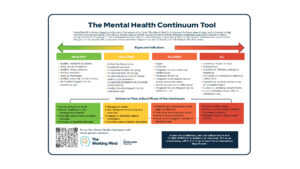
Day-to-day skills: notice early signs of strain, use a clear mental health continuum model, and build supportive routines.
Add response readiness
Mental Health First Aid
Practical response skills for higher-escalation roles — service calls, remote work, after-hours emergencies.
Complete with systemic change
Psychological Health and Safety
A proactive approach across policy, leadership routines, and work design for multi-crew, multi-site employers.
Who this training is for
Pick cohorts by role. Keep groups practical.
- Owners and senior operations leaders. Set expectations. Fund the plan. Model language.
- Project managers and site supervisors. Lead performance talks without stigma.
- Crew leaders and supervisors. Run the daily tone on site.
- Safety and HR. Build pathways, documentation, and follow-up.
- Apprentices and journeypersons. Learn shared language and peer support skills.
- Office and dispatch. Support communication across field and office.
What your team leaves with
Training gives everyone the same language, so a crew leader, a construction safety officer, and dispatch handle concerns the same way. National health and safety admins leave with a simple check-in approach for hard days, clearer boundaries, and a direct path for what to do next when someone is struggling. Crews leave with stronger peer support habits and fewer “guessing games” when behaviour changes.
Suggested rollout plan built for trades schedules
Trades teams run on tight windows and shifting site demands, so training needs to fit how you already work.
Example 1: Supervisor rollout
Fast impact on culture and conflict.
- Train forepersons, supers, safety leads first
- Add MHFA for escalation roles
- Bring crews in once leaders share language
Example 2: Site-based cohorts
Best for culture shift across one jobsite.
- Train mixed cohorts per site
- Repeat across active projects
- Use short refreshers at toolbox talks
Example 3: Scale to regions
Best for multi-site employers.
- Train leadership cohorts by region
- Standardize a support pathway
- Track completion and follow-through
Trades Metal Health Training FAQ
Yes. Training uses clear language and practical scenarios.
No. Training improves early support and referral pathways.
Training supports safer conversations and stronger supervisor response.
Yes. Shared language reduces friction and improves coordination.
Featured Case Study
Showing the Way Forward: AMHSA’s Bold Approach to Mental Health at Work
The Alberta Municipal Health and Safety Association (AMHSA) is expanding its approach to workplace safety by making psychological health a core part of training and support. Working with Opening Minds, AMHSA has grown from virtual mental health training during the pandemic to in-person sessions, tailored workshops, and broader access to The Working Mind: First Responders.
Their experience shows how listening to members, building internal capacity, and taking practical action help create healthier workplace cultures.