
Psychological safety at work means people feel safe to speak up, share ideas, or admit mistakes without fear. It builds trust in teams. When trust is there, people are more engaged, more creative, and more willing to support each other.
Amy Edmondson describes psychological safety as a shared belief that the team is safe for risk-taking (Edmondson, 1999). Research shows that workplaces with strong psychological safety have higher performance and stronger learning cultures (Frazier et al., 2017).
Why Psychological Safety Matters
When people feel safe at work:
- They share their ideas more freely.
- Mistakes are seen as chances to learn.
- Leaders hear honest feedback.
- Teams become more resilient.
It also improves mental health awareness. Staff are more open to talking about stress, burnout, or workload challenges. When these issues are raised early, organizations can respond before they grow into bigger problems.
Trust, Innovation, and Engagement
Trust is the base of team success. Without it, people stay quiet, and progress slows.
With trust, employees try new ideas. This leads to innovation. It also increases engagement. People who feel listened to are more motivated and connected to their work.
Ask yourself: in your workplace, do people hesitate to speak up? If so, the culture needs work.
Building Resilience
Resilience is the ability to bounce back from stress. Teams with psychological safety are more resilient because they help each other through tough times.
When mistakes happen, they look for solutions together instead of blaming. This lowers stress and makes people stronger.
What Leaders Can Do
Leaders set the tone. To build psychological safety at work, leaders should:
- Admit their own mistakes.
- Ask questions and listen closely.
- Thank staff for honest feedback.
- Talk openly about mental health.
- Recognize effort, not only results.
Culture grows from daily habits. Leaders need to show with actions, not just words, that openness is valued.
Opening Minds Programs
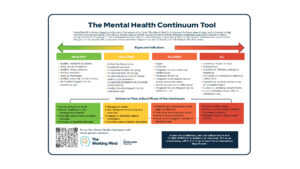
Training helps organizations make this shift. Opening Minds offers Mental Health First Aid and The Working Mind are designed to build awareness and reduce stigma. These programs give employees the tools to talk about mental health and support each other.
When combined with leadership that values openness, these programs help create safer, more resilient workplaces.
Psychological safety at work is key for trust, innovation, and engagement. It supports resilience and mental health awareness. With the right leadership and training, any workplace can move toward a culture of openness.
References
- Edmondson, A. C. (1999). Psychological safety and learning behavior in work teams. Administrative Science Quarterly, 44(2), 350–383.
- Frazier, M. L., Fainshmidt, S., Klinger, R. L., Pezeshkan, A., & Vracheva, V. (2017). Psychological safety: A meta-analytic review and extension. Personnel Psychology, 70(1), 113–165.