Understanding Eating Disorders
Eating disorders are widely misunderstood.
They are often framed as personal choices, lifestyle extremes, or issues of willpower and discipline. In reality, eating disorders are serious, clinically diagnosed mental illnesses shaped by a complex interaction of biological, psychological, and social factors.
No single comment, colleague, or leader causes an eating disorder. But environments matter. Repeated messages, shared norms, and everyday interactions can increase vulnerability – or reinforce recovery -especially for someone already at risk.
An eating disorder is a clinically diagnosed mental health condition characterized by persistent disturbances in eating behaviours, thoughts, and emotions related to food, weight, and body image. These disturbances significantly impair physical health, psychological well-being, and daily functioning.
Eating disorders are not lifestyle choices or phases. They are treatable mental illnesses influenced by biology (including genetics and brain chemistry), psychology (such as perfectionism, trauma, and coping styles), and social and environmental factors, including weight stigma and cultural norms.
Diagnosis is made by a qualified health professional using standardized criteria, most commonly the DSM-5-TR.
“No single person causes an eating disorder, but the environments we create can either increase risk or support recovery.”
Shared spaces, workplaces, homes, and communities, play a role in shaping what behaviours are normalized, praised, or tolerated. Language doesn’t just reflect culture; it helps build it.
The Spaces we Make
Words are powerful, they can create safety and support. Unfortunately, much of the language around eating and body image in our society can be stigmatizing or triggering.
Consider scenarios we may encounter in our workplaces.
Scenario 1: When food becomes a performance
Imagine a team, leaders and colleagues alike, where restrictive eating is openly discussed and admired.
Someone talks about cutting sugar, avoiding certain foods, or “being disciplined.” When they successfully restrict, they share it. When others eat differently, there are comments, sometimes framed as personal preference.
“I could never eat that.” “That’s so much sugar.”
No one intends harm.
And repetition matters.
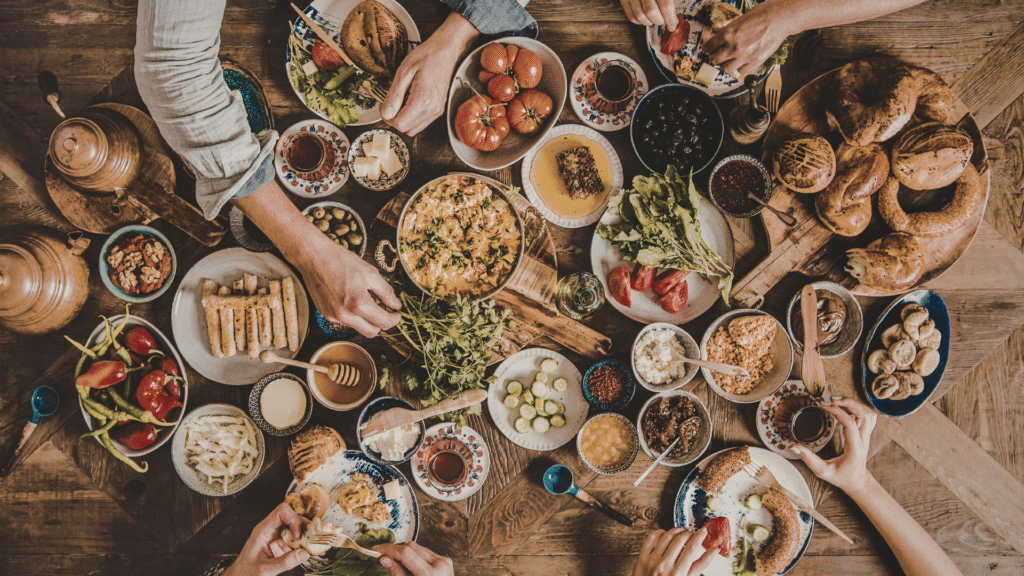
Over time, the lunchroom changes. What was once a place for rest, connection, and refuelling becomes performative. People adjust what they bring. Foods are hidden. Conversation tightens. Some people stop eating in shared spaces altogether.
This isn’t about one person’s choices. It’s about what the group learns is acceptable, admirable, or risky.
Scenario 2: When wellness rewards control
Consider a hydration or wellness challenge.
It looks supportive. It encourages a healthy habit. Participation is optional. There’s tracking, visibility, and recognition for those who “win.”
But beneath that is a familiar structure:
- Monitoring consumption
- Public comparison
- Discipline as achievement
For someone already vulnerable, this can quietly reinforce a dangerous equation: control equals worth.
Again, no bad intent. But intent alone doesn’t shape impact.
“When health is measured through visibility and comparison, care quietly gives way to control.”
Restriction as a cultural signal
Across many settings, not just workplaces, restriction is often treated as a marker of responsibility or success.
You hear it in everyday language:
- “I’m being good today”
- “I earned this”
- “I was so bad this weekend”
You see it in:
- Praise for weight loss without context
- Food rules framed as “clean” or “healthy”
- Wellness narratives that equate discipline with virtue
These messages don’t affect everyone equally. For some, they reinforce shame, rigidity, and silence.
Language as a lever for psychological health and safety
Language is one of the most accessible ways to reduce harm.
This isn’t about silence or perfection. It’s about intentional choice, especially in environments shaped by power, belonging, and visibility.
A few growth-oriented shifts:
- Instead of: “You look great! Have you lost weight?”
Try: “It’s good to see you.” - Instead of: “I had a big family dinner. I was so bad with food this weekend”
Try: “I had a good weekend.” - Instead of: “I could never eat that”
Try: Making your choice without commentary.
These are guardrails, not rules. They support psychological health and safety by reducing unnecessary judgment, comparison, and pressure.
What we can do
We cannot and should not diagnose, monitor, or police each other’s eating behaviours. That’s not our role, and trying to do so can increase shame, secrecy, and harm.
What we can do is influence shared environments, social norms, and language in ways that reduce risk, support recovery, and foster psychological safety.
This looks like:
- Avoiding commentary on bodies and food choices
- Designing wellness initiatives that prioritize autonomy over tracking or comparison
- Valuing rest, connection, and mental health, not just discipline
- Remembering that our words land in histories and experiences beyond our own
Small, consistent signals in culture, what is praised, normalized, or joked about, matter far more than individual monitoring.
This isn’t about blame. It’s about shared responsibility, collective growth, and intentional culture.
Finding support
If you or someone you know is struggling with disordered eating or an eating disorder, help is available. In Canada, you can access support through:
- National Eating Disorder Information Centre (NEDIC): https://nedic.ca
- Canadian Mental Health Association (CMHA): https://cmha.ca
- Kids Help Phone (for youth and young adults): https://kidshelpphone.ca
Early support can make a difference. No one should face these challenges alone.
Learn more about training to help you build the skills and confidence to support someone who may be experiencing a decline in mental health with Mental Health First Aid, or how to spot the signs of shifts in mental health through the Mental Health Continuum with The Working Mind.
References
- American Psychiatric Association. Diagnostic and Statistical Manual of Mental Disorders (DSM-5-TR)
- World Health Organization. International Classification of Diseases (ICD-11)
- National Eating Disorders Association (NEDA). Eating Disorders & Disordered Eating
- Canadian Mental Health Association (CMHA). Eating Disorders
- Academy for Eating Disorders (AED). Public Health & Prevention Frameworks
- National Institute for Health and Care Excellence (NICE). Eating Disorder Guidelines