

Workplace stress is not a personal weakness. It is a measurable, manageable condition that affects performance, health, and retention. And the numbers are stark.
According to the Statistics Canada Canadian Survey on Working Conditions 2024–2025, 40 per cent of Canadian workers live with constant stress. Burnout affects nearly half the workforce, and one in three employees reports their stress levels are getting worse, not better.
That is not a trend you wait out. It is one you address — systematically, at the organizational level.
Why Stress Management Is a Leadership Issue
Stress does not stay in one corner of the office. It spreads. Chronic stress impairs decision-making, reduces collaboration, and drives absenteeism. Research from CCOHS links unmanaged workplace stress to higher rates of musculoskeletal injury, cardiovascular disease, and mental health conditions like anxiety and depression.
For people leaders and wellness champions, the question is not whether stress affects your team. It does. The question is what you are doing about it.
What Actually Causes Workplace Stress
Stress at work tends to cluster around a few common sources:
- Heavy or unmanageable workloads
- Unclear roles and expectations
- Lack of control over work decisions
- Poor relationships with managers or colleagues
- Job insecurity or organizational change
- Insufficient support or resources
Financial pressure compounds all of the above. Nearly half of Canadian workers (49%) name money as their primary stressor, according to 2025 survey data from Mental Health Research Canada. When financial worry meets a high-demand job with low support, stress accumulates fast.
Practical Approaches That Work
Stress management is not about wellness apps or ping-pong tables. It is about addressing the conditions that create stress in the first place. Here is what the evidence supports.
1. Clarify Roles and Responsibilities
Ambiguity is a stressor. When employees do not know what is expected of them, anxiety fills the gap. Review job descriptions, set clear priorities, and hold regular one-on-ones to align expectations. This costs nothing and makes an immediate difference.
2. Give Employees More Control
Autonomy is a buffer against stress. Employees who have input into how they do their work report higher satisfaction and lower stress levels. Ask your team what is working and what is not. Act on what you hear. Participation is not soft management — it is effective management.
3. Train Your People Leaders
The relationship between an employee and their direct manager is one of the strongest predictors of mental health at work. A manager who recognizes early signs of stress, has an understanding attitude, and knows how to have supportive conversations changes outcomes for their whole team.
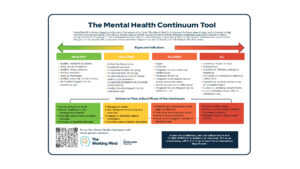
The Working Mind (TWM) training, developed by the Mental Health Commission of Canada, gives people leaders practical tools to recognize stress, support struggling employees, and reduce stigma in the workplace. It is evidence-based, and it is built for the Canadian context.
4. Build Psychological Safety
Employees in psychologically safe environments are more willing to ask for help before stress becomes a crisis. According to MHRC’s 2024 data, 68% of employed Canadians consider their workplace psychologically safe — but 23% do not. That 23% is where your greatest risk sits.
Psychological safety is not about avoiding conflict. It is about creating an environment where people feel safe to speak up, make mistakes, and ask for support without fear of judgment or retaliation. Google’s Project Aristotle identified it as the single most important factor in high-performing teams.
5. Know When to Refer
Managers are not therapists. Your role is to support — not to diagnose or treat. Know what resources your organization offers: employee and family assistance programs (EFAPs), mental health benefits, and community supports like CAMH. Know how to make a referral, and do not wait for an employee to ask.
Mental Health First Aid training teaches exactly this — how to recognize signs of a mental health problem and how to offer initial help until professional support is in place. MHFA Canada is available through OpeningMinds for workplaces across the country.
The Organizational View: Systems, Not Symptoms
Individual coping strategies matter. But they are not enough on their own. Yoga breaks and breathing exercises do not fix a poorly designed job.
Sustainable stress reduction requires examining your systems:
- Are workloads realistic? Do your employees regularly work beyond capacity?
- Do managers have the skills and support to lead through pressure?
- Does your workplace culture reward overwork or model sustainable performance?
- Are mental health supports visible, accessible, and stigma-free?
The CSA Z1003 National Standard for Psychological Health and Safety gives Canadian organizations a framework for exactly this kind of systems-level change. It covers 13 psychosocial factors — including workload management, organizational culture, and clear leadership — that predict psychological health outcomes in the workplace.
Start With Your Team Today
You do not need a formal program to start reducing stress on your team. You need attention, consistency, and the willingness to act on what you observe.
Ask your team one question in your next meeting: what is one thing that would make your work less stressful this week? Listen. Act on what you hear. That simple loop — ask, listen, act — is the foundation of a stress-aware workplace.
Then build the skills to go further. Training programs like The Working Mind and Mental Health First Aid give your people leaders the language and tools to make mental health a normal, ongoing part of how your organization operates — not an emergency response to a crisis.
Stress at work is common. Unmanaged stress does not have to be.