
Resilience is not a personality trait you hire for. It is a capacity your organization builds, measures and protects. Here is how HR teams turn resilience from a one-off workshop into a program with staying power.
Every week, 500,000 Canadians are unable to work because of mental health problems. The figure comes from a workplace mental health white paper published with the Mental Health Commission of Canada. The same research found workplace stress was the most reported cause of mental health concerns, cited by 34% of employees.
Your people face pressure every day. The question is whether your organization gives them the skills, support and conditions to recover from it.
Why Individual Resilience Is Only Half the Story
Many resilience programs place the full burden on employees. Breathe deeper. Sleep more. Bounce back faster. These habits help, but they ignore the source of the strain.
Workplace resilience rests on two pillars:
- Individual skills. Employees learn to spot early signs of strain in themselves and others, and to act before small problems grow.
- Organizational conditions. Workloads, leadership behaviour, role clarity and recognition either protect people or wear them down.
Train people to cope without fixing the conditions, and you ask them to run uphill forever. Fix the conditions without building skills, and employees lack a shared language to speak up. A strong program does both.
Step 1: Start With Data, Not Assumptions
Before you buy training, find out where strain lives in your organization. Pull the numbers you already hold:
- Absenteeism and short-term disability trends by department
- Employee and Family Assistance Program usage rates
- Turnover and exit interview themes
- Engagement survey results on workload and support
Then add a validated psychosocial survey. Guarding Minds @ Work offers free tools to assess the 13 psychosocial factors linked to the National Standard. These results show you which teams need help first, and why.
Step 2: Close the Strategy Gap
The white paper above found 75% of employees reported their workplace had no overall mental health strategy. It also found 71% of organizations offered an Employee and Family Assistance Program, yet only 20% of employees used it.
Benefits on paper do not build resilience. People need to know what support exists, trust it, and feel safe asking for it. Tie your resilience program to a written strategy with clear owners, goals and timelines.
The CSA Z1003 National Standard for Psychological Health and Safety in the Workplace gives you a ready framework. It covers policy, planning, implementation and review. Use it as your backbone.
Step 3: Build Skills With Evidence-Based Training
Pick training designed for the workplace and backed by research. The Working Mind, developed by the Mental Health Commission of Canada, gives employees and managers practical tools to:
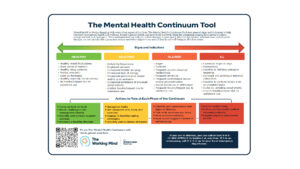
- Recognize changes in mental health using the Mental Health Continuum Model
- Reduce stigma and encourage early conversations
- Apply coping skills such as goal setting, realistic thinking and recharge routines
- Support colleagues and direct reports with confidence
Offer the manager version to people leaders first. Leaders set the tone. When they model recovery and check in with their teams, employees follow.
Add Mental Health First Aid for your wellness champions. Resilience includes knowing how to respond when a colleague is in crisis. Trained first aiders give your people a safety net, not only a coping toolkit.
Step 4: Fix the Conditions Behind the Strain
Your survey data will point to specific hazards. Act on them. Common fixes include:
- Realistic workload planning during peak periods
- Clear roles and decision rights
- Regular recognition tied to effort, not only results
- Flexible scheduling where operations allow
- Protected time for recovery after high-intensity projects
Psychological safety matters most. Google’s Project Aristotle research found psychological safety was the top factor in team effectiveness. Teams who feel safe to raise concerns recover from setbacks faster. A Psychological Health and Safety approach helps leaders build this deliberately.
Step 5: Measure, Review, Repeat
Resilience programs fail when they end after the first workshop. Set a review cycle and track:
- Training completion by role and department
- Changes in psychosocial survey scores year over year
- Absenteeism and disability claim trends
- Assistance program usage and awareness
- Manager confidence in supporting team mental health
Share results with leadership and staff. Visible progress builds trust. Trust builds participation. Participation builds resilience.
Common Mistakes HR Teams Make
- Treating resilience as a fix for poor management. No training offsets chronic overload or a toxic leader.
- Running a single lunch-and-learn. Skills fade without practice and reinforcement.
- Skipping frontline staff. Shift workers and field crews often face the highest strain and the least access.
- Ignoring measurement. Without data, you cannot show value or secure next year’s budget.
Where to Start This Quarter
Ask yourself three questions. Do you know which teams carry the most strain? Do your managers have the skills to respond? Does your organization fix the causes, or only treat the symptoms?
If any answer is unclear, start there. Run a psychosocial survey, train your leaders in The Working Mind, and build a written plan around the National Standard. For a closer look at individual skill building, read our guide on resilience training for employees.
Resilient organizations do not wait for a crisis. They prepare their people, protect their conditions and measure what matters. Your next step sets the pace.