A firefighter in Canada says he has saved more lives as a Mental Health First Aid facilitator than he ever did fighting fires.
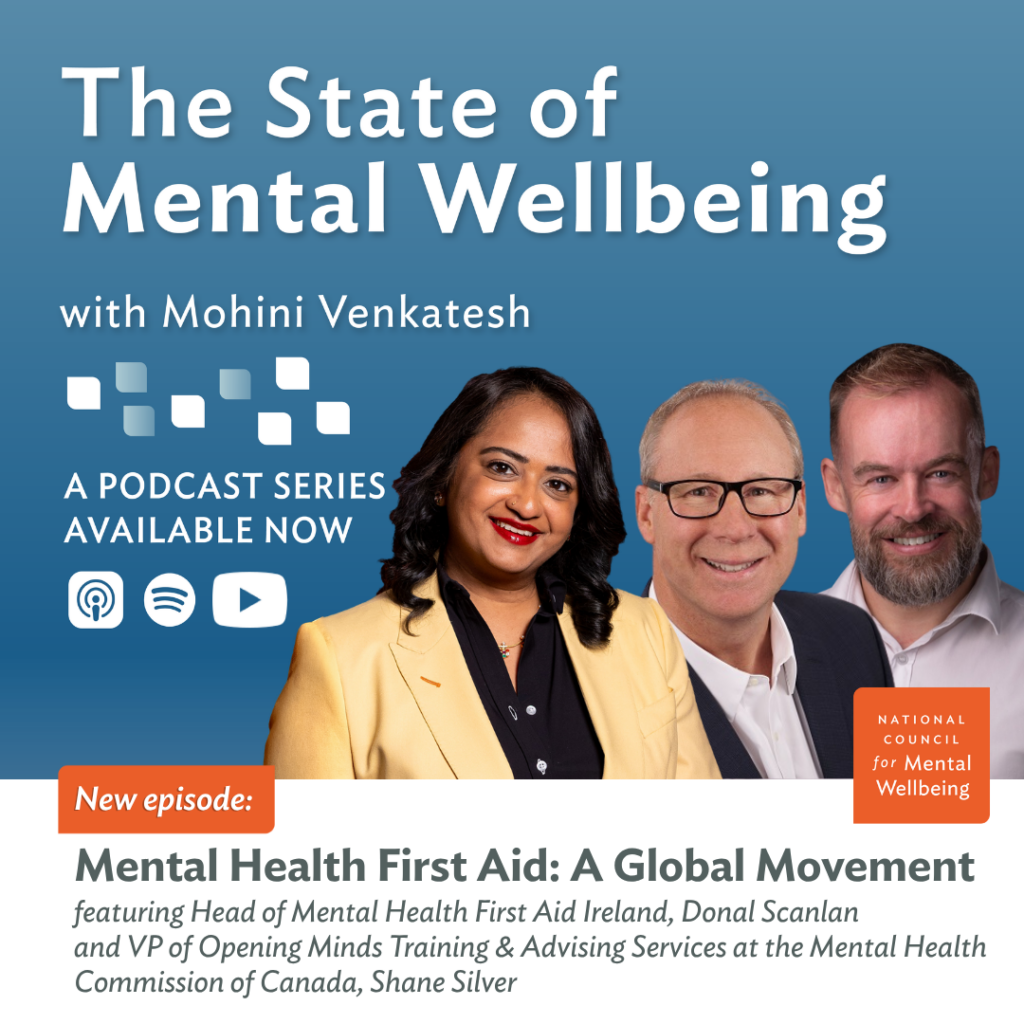
That story comes from Shane Silver, Vice President of Social Enterprise and Opening Minds at the Mental Health Commission of Canada. He shared it in a recent episode of The State of Mental Wellbeing podcast, alongside Donal Scanlan, Head of Mental Health First Aid Ireland.
The episode, titled Mental Health First Aid: A Global Movement, traces how MHFA grew from a small pilot into an international force for mental health literacy and stigma reduction.
From Alberta to a National Program
Mental Health First Aid arrived in Canada in 2006, when the province of Alberta acquired the rights to the program. Alberta adapted it for the Canadian market, then recognized the need for national reach. In 2010, the program transferred to the Mental Health Commission of Canada.
The growth since then has been substantial. Canada had approximately 210 MHFA instructors in 2010. Today, more than 1,200 facilitators work across every province.
That growth reflects what Shane describes as the core gap the program fills — not a lack of compassion, but a lack of confidence. People want to help. They don’t always know how.
The Same Gap Exists in Ireland
In Ireland, Donal Scanlan arrived at the same conclusion through a different path. MHFA was introduced by St. John of God University Hospital, a national mental health care provider that saw a need for training among health professionals.
The team soon recognized the issue went beyond clinical settings. Families, workplaces, schools, and communities all needed practical skills — and practical confidence — to support someone in crisis.
As Donal explained on the podcast:
“Mental Health First Aid wasn’t created because people were lacking compassion. It was created because people were lacking confidence.”
His persistence led to a meeting with the head of Ireland’s mental health division. A 30-minute appointment stretched to 90 minutes and resulted in a national funding agreement. MHFA is now delivered across the Irish public sector, police, defense forces, and community organizations.
Adapting the Program for Real Communities
One of the strongest threads in this episode is adaptation. Generic training does not work. What works is meeting communities where they are.
In Canada, this has meant developing specific versions of MHFA for:
- First Nations, Inuit, and Métis communities, drawing on lessons from Australia’s approach with Indigenous populations
- First responders — like police — who face unique mental health pressures and stigma
- Youth, particularly in response to rising mental health challenges in the years following the pandemic
Why Instructors Are the Movement
Both Shane and Donal name facilitators as the engine behind MHFA’s growth.
Without a passionate, geographically distributed network of instructors, no central organization trains the volume of people needed to shift a national culture. MHFA’s model — instructor-led, dialogue-based, and grounded in personal experience — creates connection at scale.
Donal notes MHFA Ireland now trains within the European Parliament, European Commission, and European Council. What started as a small initiative in one hospital now reaches international institutions.
The Universal Lesson
When asked for one piece of wisdom they would share with listeners, both guests gave answers worth sitting with.
Shane: Be brave. Be vulnerable. When leaders share their own mental health experiences, others feel permission to do the same. That single act changes culture — and the psychological health and safety of entire organizations.
Donal: Protect human connection. Skills and programs are tools. The relationship — the conversation between two people — is what saves lives. At a time when loneliness and isolation are major public health concerns, that conversation is the antidote.
These are not abstract ideas. They are practical principles you apply in your workplace, your community, and your personal relationships.
What You Can Do Next
If this episode resonates with you, consider how your organization approaches mental health.
Mental Health First Aid training equips people with the skills to recognize and respond to a mental health or substance use crisis. It is available for workplaces, communities, schools, and specific sectors across Canada.
The Working Mind addresses mental health in the workplace directly — building a culture where conversations about well-being are normalized and encouraged.
Both programs are built on the same principle Shane and Donal describe: people are not lacking compassion. They need confidence and tools.
Listen to the Episode
The full episode is available on every major podcasting platform:
Shane Silver is Vice President of Social Enterprise and Opening Minds at the Mental Health Commission of Canada. Donal Scanlan is Head of Mental Health First Aid Ireland. The episode is hosted by Moini Benitesh, Chief of Staff at the National Council for Mental Wellbeing.