
Hybrid and remote work give us freedom: no commute, more choice over when we log in, and the chance to spend extra time with family or hobbies. But they also blur the line between “on” and “off.”
A recent survey found that three out of four remote workers still struggle to fully switch off after hours. Health researchers add a clear warning: when people work from home without strong limits, stress, sleep problems, and even muscle pain rise. To keep true work life balance, we need better boundaries—both for employees and for leaders.
Why blurred boundaries hurt
Studies that tracked people through the COVID-19 shift to remote work show a simple pattern: the less clear your work and home spaces are, the more likely you feel tired, distracted, or burned out. Messages that pop up at night or a laptop that stays open at the kitchen table keep your brain in “work mode,” making real rest hard to find. Over time, this erodes employee wellness and sets the stage for burnout.
Digital tools can add another layer of strain. A 2024 review on digital fatigue links constant video calls and nonstop pings to lower focus and higher emotional exhaustion. In short, flexibility means nothing if screens never go dark.
Boundaries do work—proof from research
Good news: setting clear limits is a proven form of burnout prevention. In a 2024 daily-diary study, teleworkers who used at least two simple tactics—such as a firm log-off time or a visual cue to close the “office” corner—reported less stress and more job satisfaction, even when their workload stayed the same. Boundaries don’t have to be fancy; they just have to be followed.
Five easy tactics for employees
- Pick a digital sunset. Decide when work apps go quiet (for example, 7 p.m.). Use “Do Not Disturb” or silence notifications so you’re not tempted to peek.
- Take micro-breaks. Stand up, stretch, and look away from screens for five minutes each hour. Short breaks cut eye strain and refresh your mind.
- Leave a breadcrumb. Before you log off, note the first task for tomorrow. This trick lets your brain “park” unfinished work and relax.
- Create a work zone. Even in a small space, a folding screen or separate tray table tells you—and your family—when you’re on the clock.
- Share your hours. Put your work times in a shared calendar or status emoji. When teammates know you’re offline, the pressure to answer right away disappears.
Tips for managers and team leads
- Model healthy habits. Schedule late-night emails to send in the morning. Speak openly about your own log-off rules.
- Fix meeting overload. Question every meeting. Could an update live in a shared doc? If a meeting is needed, try camera-optional or cap it at 15 minutes.
- Go asynchronous first. Tools like project boards or recorded demos let people work when they’re fresh, reducing interruption fatigue.
- Write a right-to-disconnect policy. Ontario’s law on after-hours messaging is a good template. Clear rules protect both performance and personal time.
- Check in on workload. Short surveys or one-to-ones can spot stress early. A supportive chat now may stop burnout later.Frontiers
Training that supports healthy boundaries
The Mental Health Commission of Canada (MHCC) offers nation-wide courses through its Opening Minds division that teach practical skills for mental wellbeing at work:
- Mental Health First Aid (MHFA). A hands-on course that shows anyone how to spot early signs of distress and give first support. Mental Health Commission of Canada
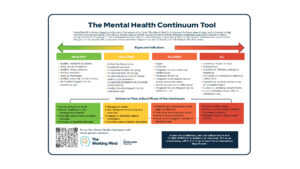
- The Working Mind. Builds coping tools and fights stigma so people feel safe talking about stress.
- Psychological Health and Safety. Helps companies set policies that protect mental health from day one.
Peer-reviewed evaluations of these programs find they boost mental-health knowledge and make staff more likely to seek help—both key steps toward lasting employee wellness.
Quick boundary checklist
| ✅ | Action | Why it helps |
|---|---|---|
| ☐ | Morning “commute” walk | Signals your brain it’s time to work |
| ☐ | Status emoji for focus time | Cuts random pings |
| ☐ | Calendar block for lunch | Protects true breaks |
| ☐ | Weekly review every Friday | Spots creeping overload |
| ☐ | One tech-free meal daily | Gives eyes and mind a rest |
Stick this list on your monitor. Do a quick scan each Friday and see where you can improve next week.
The big picture
Remote and hybrid work are here to stay. That means work life balance can’t be an afterthought—it has to be built into how we schedule, message, and meet. Research shows blurred lines raise stress, while simple, clear boundaries lower it. Employees can start with a digital sunset and a defined workspace; managers can lead by example, trim meetings, and use MHCC training to raise awareness.
The result? People who log off feeling refreshed, teams that hit goals without late-night emails, and organisations that keep talent by protecting wellbeing. Flexible work should give us the best of both worlds. With the right boundaries, it finally can.