

Compassion fatigue in healthcare is the cost of caring. It hits the people who give the most of themselves to patients.
Many healthcare workers use “burnout” to describe any kind of exhaustion. Burnout and compassion fatigue overlap. They are not the same.
The difference matters. Each one needs a different response.
What Is Compassion Fatigue?
The Canadian Medical Association describes compassion fatigue as the emotional toll of caring for people in pain. It also goes by the names vicarious trauma and secondary trauma.
It grows out of empathy itself. You absorb the suffering of the patients and families you support. Over time, your emotional reserve runs dry.
Compassion fatigue mostly affects people in direct care roles:
- Nurses and personal support workers
- Physicians and paramedics
- Social workers, psychologists, and spiritual care staff
- Long-term care and palliative care teams
How It Differs From Burnout
- Source. Burnout comes from chronic workplace stress, such as workload, staffing, and lack of control. Compassion fatigue comes from repeated exposure to the suffering and trauma of others.
- Onset. Burnout builds slowly over months or years. Compassion fatigue often arrives suddenly and with intensity.
- Reach. Burnout shows up in any profession. Compassion fatigue centres on caring roles.
- Response. Burnout eases when workplace conditions change. Compassion fatigue also needs support for trauma exposure, like debriefing and peer support.
Many healthcare workers experience both at once. A short-staffed unit full of high-acuity patients creates ideal conditions for each.
Warning Signs to Watch For
- Less empathy, or emotional numbness
- Feeling helpless about patient suffering
- Irritability, anxiety, or sadness
- Trouble concentrating or making decisions
- Sleep problems, including nightmares
- Withdrawal from colleagues, friends, and family
- Increased substance use
Do you recognize any of these in yourself or your team?
Why It Matters for Your Organization
Compassion sits at the core of quality care. When it erodes, patients feel it.
The Mental Health Commission of Canada names compassion fatigue among the frequent workplace conditions facing healthcare workers, alongside stress, anxiety, depression, and burnout. The same resource notes healthcare workers are about 1.5 times more likely to be off work due to illness or disability than workers in all other sectors.
Left unaddressed, compassion fatigue leads to:
- Errors and lower quality of care
- Absenteeism and turnover
- Conflict within teams
- Long-term mental health problems
What Leaders and Teams Do About It
Compassion fatigue is an occupational hazard. Treat it like one.
- Debrief after critical incidents. Give teams structured time to process hard cases.
- Build peer support. Trained colleagues spot changes early and connect people to help.
- Rotate high-exposure assignments. Spread the emotional load where staffing allows.
- Protect recovery time. Breaks and time off are not perks.
- Name it. Talk about compassion fatigue in team meetings. Stigma loses its grip when people hear the term out loud.
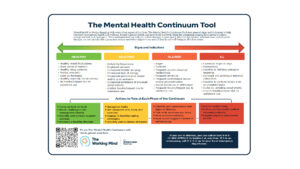
The Working Mind Healthcare gives staff tools to see where they sit on the mental health continuum and act before strain turns into illness. Mental Health First Aid prepares colleagues to offer support in the moment.
Caring for the Carers
Compassion fatigue does not mean you care less. It means you have cared a lot, for a long time, without enough support.
The fix is shared. Individuals learn to spot the signs. Organizations build systems to catch people before they fall.
Learn more about our mental health training for healthcare teams.