
Most employee wellness programs launch with good intentions and no plan to measure them. Without numbers, your program becomes the first line item cut when budgets tighten.
The business case exists. Deloitte Canada studied seven large Canadian employers and found mental health programs in place for one year returned a median of $1.62 for every dollar spent. Programs running three years or more returned a median of $2.18. Read the Deloitte findings.
The cost of doing nothing runs higher. The Mental Health Commission of Canada estimates mental health problems cost the Canadian economy more than $50 billion a year. Businesses absorb more than $6 billion of it in lost productivity from absenteeism, presenteeism, and turnover.
So why do so many wellness programs fail to show results? The answer sits in what you measure, and in what you leave out.
Why Most Wellness Programs Miss the Mark
- Activity over outcomes. Yoga classes, step challenges, and meditation apps produce participation counts. Participation is not impact.
- Individual focus only. Programs ask employees to cope with stress while workload, leadership habits, and culture stay the same.
- No baseline. Teams launch without data, then have nothing to compare against a year later.
- Short time horizon. Leaders expect returns within one budget cycle. The Deloitte data shows returns grow with time.
Ask yourself one question. If your wellness program ended tomorrow, which number in your organization would change?
What to Measure: A Three-Layer Framework
Strong measurement tracks three layers. Each layer tells you something different about your program.
Leading indicators show early signals of change:
- Training completion rates
- EAP awareness and use
- Survey scores on psychological safety
- Manager confidence in starting mental health conversations
Lagging indicators show business outcomes:
- Absenteeism days per employee, benchmarked against Conference Board of Canada absenteeism data
- Short-term and long-term disability claims tied to mental health
- Voluntary turnover and the cost to replace each departure
- Drug plan spending on mental health medications
Cultural indicators show whether stigma is shifting:
- Employee perceptions of mental health stigma
- Willingness to ask for help or disclose a struggle
- Trust in direct managers
How to Calculate Wellness Program ROI
The formula stays simple. ROI equals savings minus program cost, divided by program cost. The discipline sits in the inputs.
- Set a baseline using 12 months of data before launch.
- Total every cost: vendor fees, staff time, training hours, and communications.
- Measure change in lagging indicators at 12, 24, and 36 months.
- Assign dollar values to each outcome, such as the average cost of a disability claim, a day of absence, or a replacement hire.
- Compare results against your pre-launch trend or a comparison group.
Here is a hypothetical example. A 500-person employer spends $60,000 on mental health training. Over the next year, mental health disability claims drop by three, and each claim averaged $25,000. Savings total $75,000. The ROI works out to 25 percent in year one, before counting gains in retention or productivity.
Finding the Gaps in Your Program
ROI data tells you whether your program works. A gap audit tells you why. Run through these questions with your HR team and wellness champions:
- Do your people leaders know how to spot early signs of distress?
- Does your program address workplace factors, or only personal coping?
- Do you have a clear response plan for a mental health crisis at work?
- Does your approach align with the CSA Z1003 National Standard for Psychological Health and Safety in the Workplace?
- Do you survey employees on psychosocial risks? Guarding Minds @ Work offers free tools to assess the 13 psychosocial factors named in the Standard.
Each “no” marks a gap. Each gap marks a place where your investment leaks value.
Close the Gaps With Evidence-Based Training
Perks alone do not change culture. Skills do. Three programs target the most common gaps:
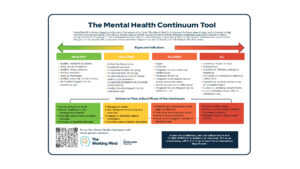
- The Working Mind builds mental health literacy, reduces stigma, and gives managers and employees a shared language for mental health.
- Psychological Health and Safety helps HR and leadership teams put the National Standard into practice.
- Mental Health First Aid equips employees to respond when a colleague shows signs of a mental health problem or crisis.
Training also gives you clean, trackable data. Completion rates, pre- and post-training confidence scores, and manager referrals all feed straight into your leading indicators.
Start Small, Measure Everything
You do not need a perfect dashboard on day one. Pick one gap. Set a baseline. Train your leaders. Measure again in 12 months.
Wellness ROI grows with time and consistency. The employers seeing the strongest returns treat mental health as a long-term operating priority, not a seasonal campaign.
A year from now, what will your data say?