

Most workplace mental health problems start with how work is designed, not with the people doing it. Psychosocial risk factors are where you find them.
Psychosocial risk factors are the parts of work which affect how people think, feel, and cope. Workload. Clarity of roles. Respect between colleagues. The support people get when things go wrong.
Canada already has a framework for them. The National Standard for Psychological Health and Safety in the Workplace (CSA Z1003) names 13 factors every employer should assess. The Canadian Centre for Occupational Health and Safety lists the warning signs of each one.
We covered the broader idea in our post on psychosocial hazards at work. This guide focuses on the practical side. How do you find the risks in your own workplace, and what do you do next?
The 13 psychosocial factors
The standard groups the risks into 13 areas:
- Organizational culture
- Psychological and social support
- Clear leadership and expectations
- Civility and respect
- Psychological demands and competencies
- Growth and development
- Recognition and reward
- Involvement and influence
- Workload management
- Engagement
- Balance
- Psychological protection
- Protection of physical safety
You will not fix all 13 at once. You do not need to. Most organizations find two or three factors driving most of their problems.
Know the warning signs
Each factor leaves a trail. CCOHS describes the signals to watch for:
- Workload management: fatigue, a falling sense of accomplishment, negative attitudes toward the job
- Civility and respect: rising conflict, emotional exhaustion, people pulling back from their work
- Clear leadership and expectations: irritability, nervousness, middle managers who feel powerless
- Psychological protection: people stop speaking up, stop reporting mistakes, stop offering ideas
- Psychological and social support: absenteeism, withdrawal, burnout
Look at your own data first. Sick days, turnover, exit interviews, and grievance logs often point to the same factor. Our post on absenteeism and mental health explains how to read those numbers.
Step 1: Ask your people
Data shows where to look. Your employees tell you why.
Guarding Minds @ Work offers a free, confidential survey built around the 13 factors. It gives you a baseline score for each one and shows where employee and leader views differ.
Keep the survey anonymous. Share the results with staff. Nothing kills participation faster than a survey which disappears.
Step 2: Rank the risks
Not every gap carries the same weight. Rank each factor by two questions:
- How many people does this affect?
- How severe is the harm if nothing changes?
The CCOHS psychosocial hazard checklist helps you structure this conversation with your health and safety committee.
Step 3: Fix the system, not the person
Resilience workshops help individuals cope. They do not reduce the risk itself.
If workload is the problem, change workload. Redistribute tasks. Set realistic deadlines. Remove low-value work. If civility is the problem, set clear behavioural expectations and enforce them consistently.
The fix belongs to the system. This is the core idea behind Psychological Health and Safety training, which teaches leaders to treat psychosocial risks the same way they treat physical ones.
Step 4: Build skills across the organization
Policies set the rules. People make them real.
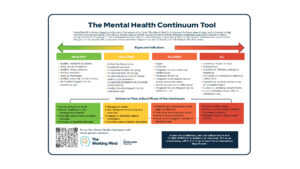
Managers need the language and confidence to talk about mental health without stigma. The Working Mind gives leaders and employees a shared model for recognizing changes in mental health and responding early.
Where to start this month
- Pull your absence, turnover, and claims data for the last 12 months
- Run the Guarding Minds @ Work survey
- Pick the two lowest-scoring factors
- Assign an owner and a deadline for each
- Re-survey in six to 12 months
Which of the 13 factors would your employees rate lowest today? If you do not know, start there.