

Half of construction workers in one Canadian survey do not feel at ease talking about mental health with coworkers. Silence is the norm in the trades. It doesn’t have to stay the norm.
Ask a tradesperson about a sore back and you’ll get a straight answer. Ask about stress, anxiety, or depression, and the conversation often ends.
Mental health in trades carries a stigma all its own. Understanding where it comes from is the first step to breaking it.
What the Silence Looks Like
A 2024 survey by Construction Safety Nova Scotia of 1,171 construction workers found:
- 50% do not feel at ease talking about mental health with coworkers
- 26% regularly use alcohol or drugs to cope with stress
- 35% report discrimination or harassment, which nearly doubles their risk of poor mental health
Silence has a cost. The Institute for Work & Health reports construction workers in Ontario and Alberta are almost twice as likely to die by suicide as the broader labour force. We cover the wider picture in mental health in construction.
Why Workers Stay Silent
Stigma in the trades grows from a few common sources.
- A culture of toughness. Many crews value grit and self-reliance. Admitting a struggle feels like admitting weakness.
- Fear for the paycheque. Work often depends on reputation and the next call from a foreman. Workers worry speaking up will cost them shifts or future jobs.
- No shared language. Without words for mental health, workers stay quiet or joke it off.
- Leaders who stay silent too. When supervisors never mention mental health, crews read the silence as a rule.
- Male-dominated crews. Men make up most of the trades workforce, and the suicide rate among Canadian men is about three times the rate among women, according to the Public Health Agency of Canada.
How Stigma Shows Up on Site
- Jokes about “going soft” or “losing it”
- Workers hiding symptoms until a crisis
- Substance use brushed off as blowing off steam
- Unexplained sick days
- Skilled workers quietly leaving the trade
Stigma also hits the bottom line. In the same Nova Scotia survey, 40% of workers said they are considering leaving because of stress. Every skilled worker who walks away takes years of experience with them.
Five Ways to Break the Silence
Stigma shifts when people see others speak up and nothing bad happens.
- Leaders go first. A foreman who shares a personal story gives the whole crew permission.
- Make it routine. Add mental health to toolbox talks and safety meetings.
- Use plain language. Talk about stress, sleep, and pressure in jobsite terms.
- Protect the paycheque. Make clear no one loses work for asking for help.
- Post the resources. Put EAP details and the 9-8-8 crisis line where workers see them every day.
Training Changes the Conversation
Stigma reduction sits at the core of the Opening Minds mission, established by the Mental Health Commission of Canada.
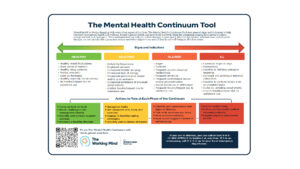
The Working Mind Trades teaches the Mental Health Continuum Model, a simple tool crews use to talk about mental health without labels. Workers describe where they are on a scale from healthy to ill, instead of naming a diagnosis.
When the whole crew shares the same words, a quick check-in at the truck feels normal instead of awkward.
Mental Health First Aid gives workers the skills to respond when a coworker is in crisis.
One Question to Start
When was the last time someone on your crew talked openly about a hard week?
If the answer is “never,” start there. See how our trades mental health training brings mental health into the jobsite conversation.